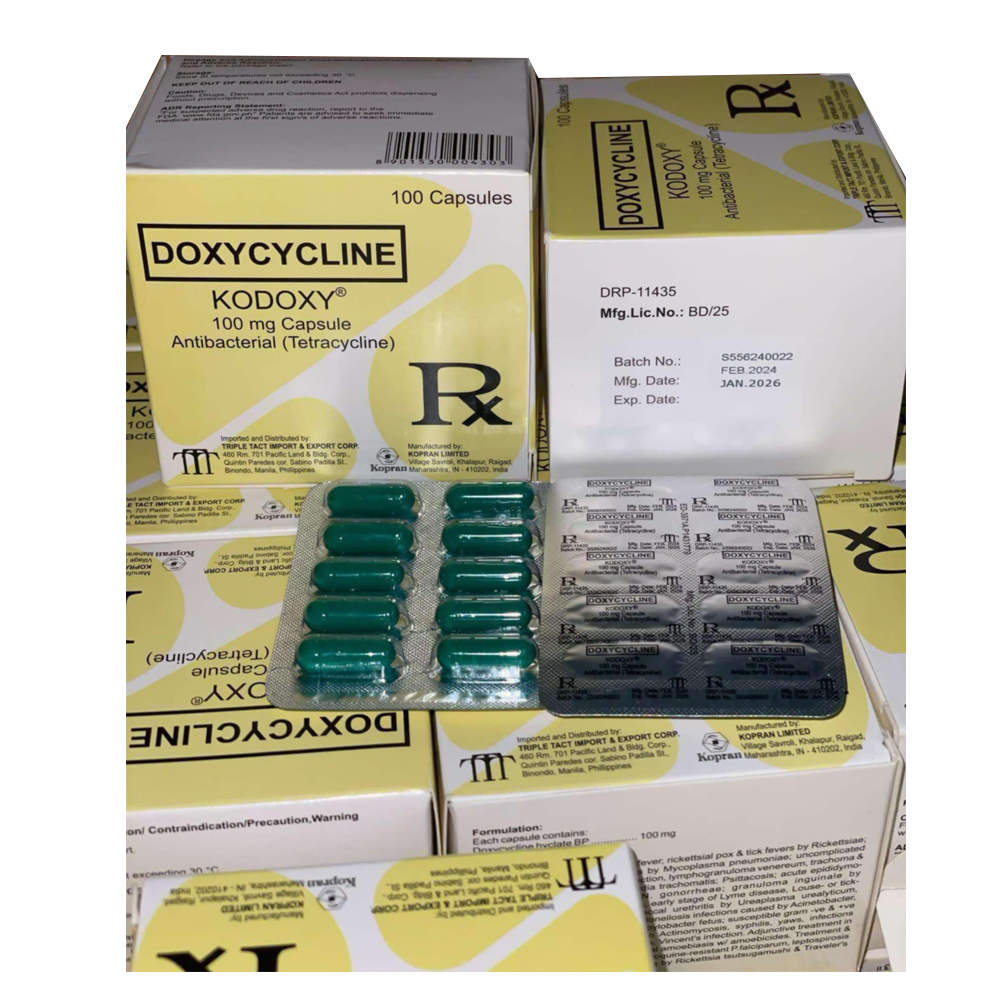
Doxycycline Kodoxy
Summary of product characteristics
What is doxycycline?
Doxycycline is a tetracycline antibiotic that inhibits bacterial growth and is thought to have anti-inflammatory effects. Doxycycline is used for bacterial infections, including acne, rosacea, urinary and respiratory tract infections, eye infections, gum disease, gonorrhea, chlamydia, and syphilis. Doxycycline can also be used to prevent malaria and treat infections caused by mites, ticks, or lice.
Doxycycline hyclate and doxycycline monohydrate are two different salt forms of doxycycline available; one difference between the two is that doxycycline hyclate is soluble in water, while doxycycline monohydrate is very slightly soluble in water.
Doxycycline 100mg, 75mg, and 50mg are the most common strengths of capsules and tablets available. It is also available as an injection, suspension, or syrup.
Doxycycline side effects
Common doxycycline side effects
The most common doxycycline side effects include nausea and vomiting, upset stomach, loss of appetite, mild diarrhea, skin rash or itching, darkened skin color, and vaginal itching or discharge.
Serious doxycycline side effects
Get emergency medical help if you have any signs of an allergic reaction to doxycycline (symptoms include hives, difficulty breathing, and swelling in your face or throat) or a severe skin reaction (fever, sore throat, burning in your eyes, skin pain, red or purple skin rash that spreads and causes blistering and peeling).
Seek medical treatment if you have a serious drug reaction that can affect many parts of your body. Symptoms may include skin rash, fever, swollen glands, flu-like symptoms, muscle aches, severe weakness, unusual bruising, or yellowing of your skin or eyes. This reaction may occur several weeks after you begin using this medicine.
Other serious doxycycline side effects may occur. Call your doctor at once if you have:
- severe stomach pain, diarrhea that is watery or bloody;
- throat irritation, trouble swallowing;
- chest pain, irregular heart rhythm, feeling short of breath;
- little or no urination;
- low white blood cell counts - fever, chills, swollen glands, body aches, weakness, pale skin, easy bruising or bleeding;
- severe headaches, ringing in your ears, dizziness, nausea, vision problems, pain behind your eyes;
- loss of appetite, upper stomach pain (that may spread to your back), tiredness, nausea or vomiting, fast heart rate, dark urine, jaundice (yellowing of the skin or eyes).
(source: https://www.drugs.com)